
sandblaster helmet be used for all types of blasting
A sandblaster helmet is an essential piece of protective equipment designed to shield workers from the harsh conditions associated with sandblasting. However, sandblasting itself is a broad term that includes several different methods, such as dry blasting, wet blasting, soda blasting, and vapor blasting. Each type of blasting presents unique challenges and requires specific safety measures. While a standard sandblaster helmet provides excellent protection for most applications, it is important to determine whether it is suitable for all types of blasting.
Dry sandblasting, which is one of the most common forms of abrasive blasting, generates high amounts of dust and airborne particles. A high-quality sandblaster helmet is well-suited for this type of blasting as it provides full head protection, a durable impact-resistant shell, and an integrated air supply system to ensure clean breathing air. Most helmets designed for dry sandblasting feature sealed visors and advanced filtration systems to prevent the inhalation of hazardous dust.
Wet blasting, also known as slurry or vapor blasting, involves mixing abrasive materials with water to reduce dust levels. While this method is considered safer in terms of airborne contaminants, it introduces the challenge of moisture exposure. A standard sandblaster helmet may not always be waterproof, making it less effective in wet conditions. If wet blasting is a frequent requirement, workers should consider using helmets with water-resistant seals and corrosion-resistant components to prevent damage over time.
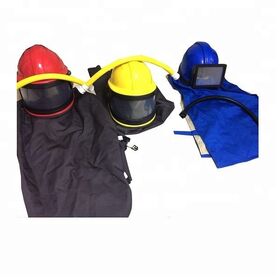
Can a sandblaster helmet be used for all types of blasting?
Soda blasting, which uses sodium bicarbonate as the abrasive material, is a gentler process used for delicate surfaces such as glass, wood, and automotive parts. Since soda blasting produces fine dust, a sandblaster helmet with a strong air filtration system is still necessary to protect the wearer from inhaling particles. However, because this process is less aggressive than traditional sandblasting, some workers may opt for lighter protective gear instead of a full helmet, depending on the work environment.
Steel grit and shot blasting are much more aggressive forms of blasting that involve the use of heavy-duty abrasives. These processes create significant impact forces, requiring a sandblaster helmet made from reinforced materials such as fiberglass or high-density polyethylene (HDPE) to withstand high-velocity particle rebounds. Additionally, a thick visor with anti-scratch coatings is essential to maintain visibility and prevent damage from flying debris.
For those in the market for reliable sandblasting safety equipment, shopping online for wholesale sandblast helmets is a convenient option. Global Sources provides a wide range of sandblaster helmets from verified manufacturers and wholesalers in China, India, Korea, and other countries. Their B2B platform allows buyers to compare prices, review minimum order quantities (MOQs), and connect with reputable suppliers to find the best protective gear for their specific needs.
In conclusion, while a sandblaster helmet can be used for most types of blasting, it is crucial to choose the right model based on the specific blasting method. Factors such as dust levels, moisture exposure, impact resistance, and air filtration must be considered to ensure optimal safety and performance. Investing in the correct helmet enhances worker protection and efficiency, making blasting operations safer and more effective.
